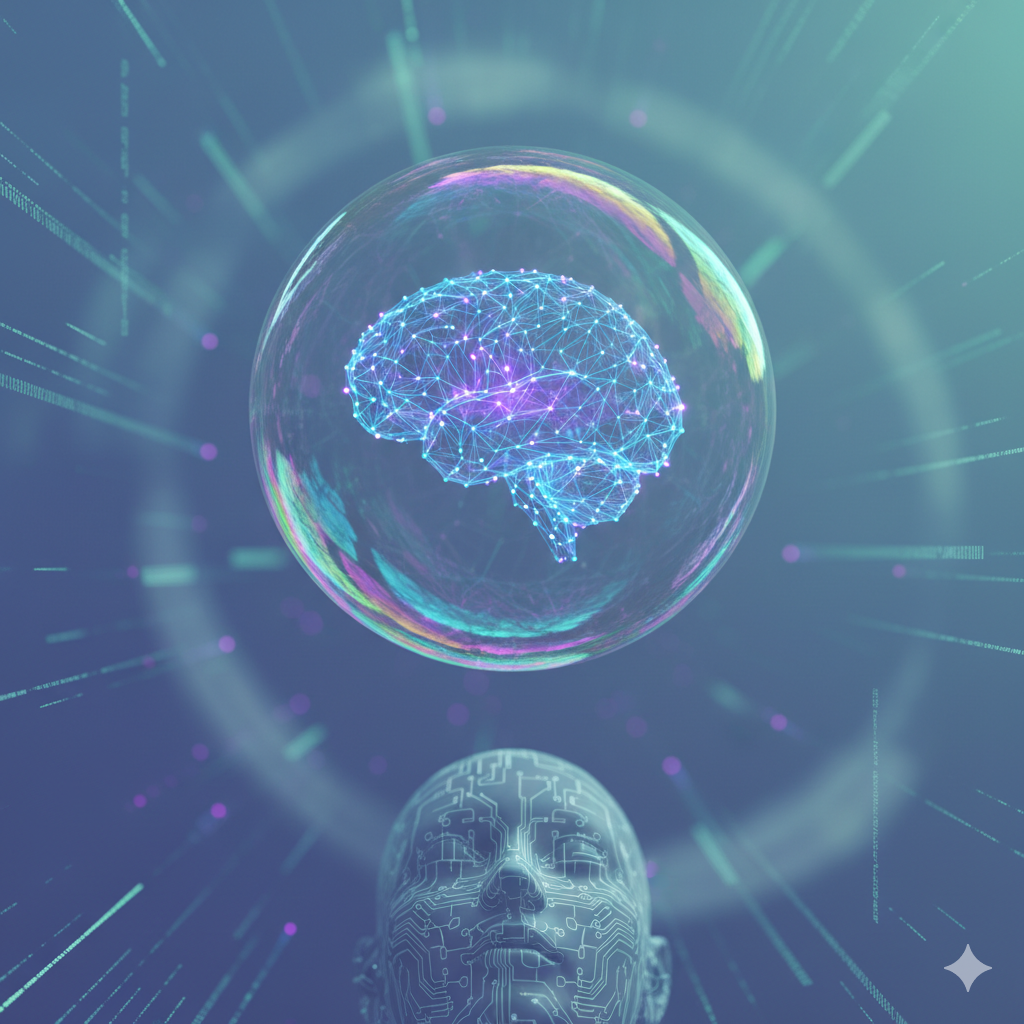
Artificial intelligence (AI) is revolutionizing everything—from how we work to how we think. But with sky-high valuations, billions in venture capital, and endless hype, experts are asking a tough question: Is there an AI bubble forming?
Let’s dive into what the AI bubble risk really means, what signs to watch for, and whether you should be worried about it.
🚀 What Is an AI Bubble?
An AI bubble happens when enthusiasm and investment in artificial intelligence grow much faster than the technology’s actual ability to deliver real-world value.
It’s similar to past market bubbles—like the dot-com boom of the 1990s or the crypto surge of 2021—when investors poured money into startups that later failed to justify their massive valuations.
In short: a bubble means too much hype, too little substance.
💸 Why Experts Are Warning About an AI Bubble Risk
Here are some of the key reasons analysts think we could be in risky territory:
- Skyrocketing Valuations
Many AI startups with little to no profit are being valued at billions. This reminds investors of the dot-com era, when unproven companies went public too early. - Overreliance on Hype
Terms like “AI-powered” or “GPT-enabled” are being used everywhere—often as marketing buzzwords rather than real innovation. - Unsustainable Investment Flows
Venture capital firms are pouring record amounts into AI projects. If results don’t meet expectations soon, this funding could dry up quickly. - Infrastructure Bottlenecks
The AI industry depends heavily on advanced chips (like NVIDIA GPUs), and supply shortages could limit growth.
🧩 Why It Might Not Be a Bubble (Yet)
Not everyone agrees that we’re in an AI bubble.
Here’s why some experts believe AI has lasting value:
- Real-World Applications are growing fast—AI is improving healthcare, finance, transportation, and education.
- Corporate Adoption is massive: global companies are integrating AI tools to reduce costs and boost productivity.
- Continuous Innovation from giants like OpenAI, Google, and Anthropic is creating long-term technological foundations.
In other words, while some areas are overhyped, the core technology is here to stay.
⚖️ So, Are We in an AI Bubble or Not?
The truth lies somewhere in between.
We’re in a phase of explosive innovation—but also exaggerated expectations.
The risk of an AI bubble comes from speculative investment, not from AI itself.
If the market adjusts naturally, strong companies with real products will survive—just like Amazon and Google did after the dot-com crash.
🔍 How to Protect Yourself from the AI Bubble Risk
Whether you’re an investor, a business owner, or a tech enthusiast, here’s how to stay safe:
- Research Before Investing – Avoid startups that rely only on “AI hype.”
- Focus on Real Use Cases – Prioritize AI companies solving real-world problems.
- Diversify – Don’t put all your money into AI stocks or funds.
- Stay Updated – Follow credible sources (like MIT Tech Review, Wired, or Bloomberg Technology).
Remember: Innovation is exciting—but caution is smart.
🌍 The Global Perspective
- In the U.S., big tech firms are driving innovation, but regulators are tightening scrutiny.
- In Europe, AI laws (like the EU AI Act) aim to prevent reckless deployment.
- In Canada and Australia, the focus is on ethical AI and sustainable growth.
The world isn’t just chasing profits—it’s learning from past bubbles to build something lasting.
📈 Conclusion: A Measured Optimism
Yes, there’s AI bubble risk, but that doesn’t mean disaster is coming.
It simply means we’re in a period of transition and excitement—and like every revolution, it will create winners and losers.
AI is not just a trend; it’s a technological shift.
Those who stay informed, rational, and grounded will benefit most from it.
❓FAQs About AI Bubble Risk
1. What exactly is the “AI bubble”?
The AI bubble refers to a situation where investor enthusiasm and valuations in AI companies rise faster than their real performance or profit potential.
2. How can investors avoid the AI bubble?
Invest in companies with proven products, transparent revenue models, and sustainable growth rather than pure speculation.
3. Is the AI market overvalued in 2025?
Some sectors (like AI startups) are likely overvalued, but foundational AI technologies remain a strong long-term investment.
4. What will happen if the AI bubble bursts?
The market could experience a correction—overhyped startups may collapse, but the strongest players will continue to lead.
5. Will AI continue to grow after the bubble?
Absolutely. Just like the internet post-dot-com crash, AI will continue evolving and powering future innovation.